
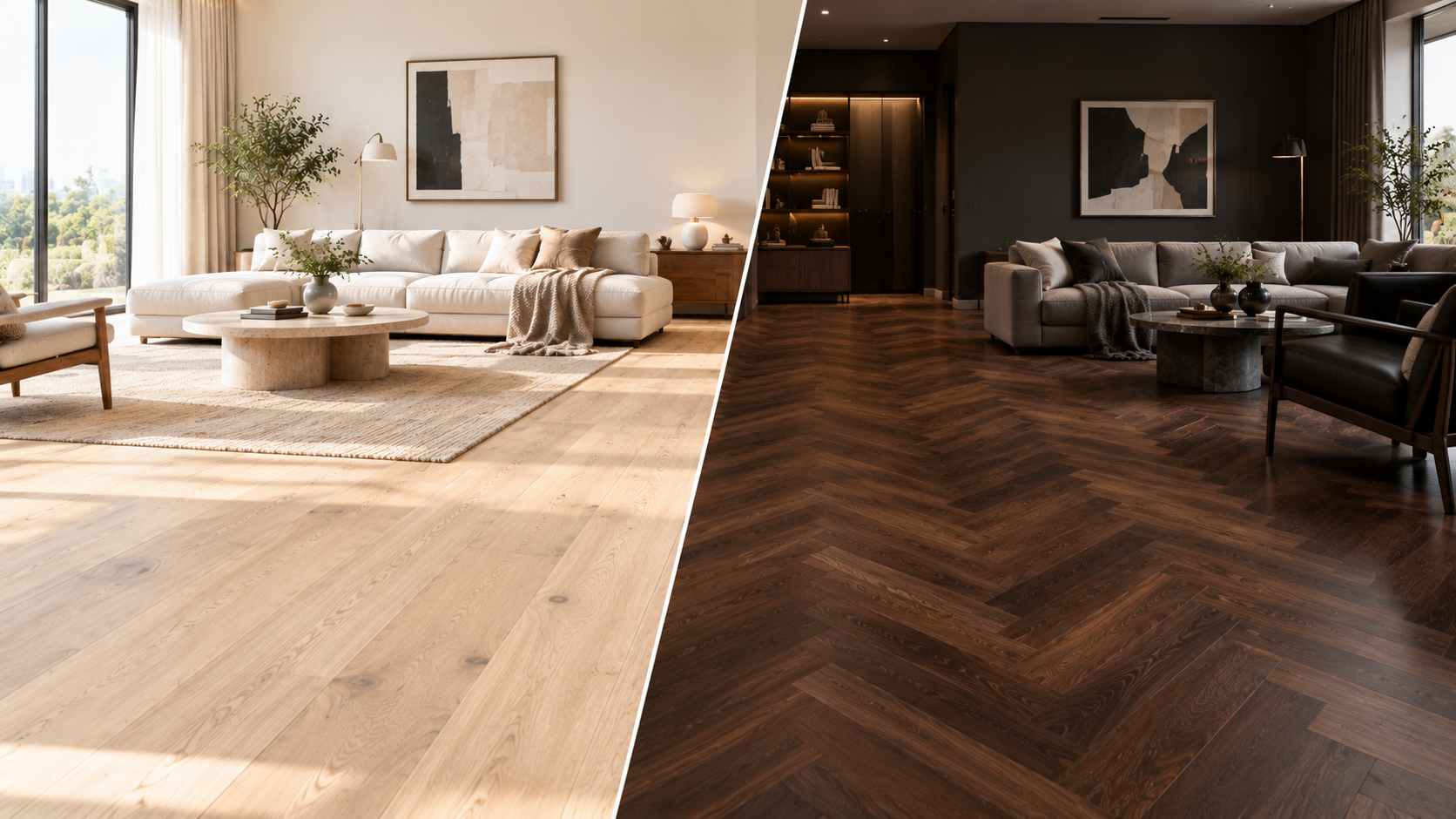
Choosing between light and dark flooring is one of the first — and most consequential — decisions in any home renovation or new-build project. The right shade doesn’t just affect how a room looks on day one; it shapes how the space feels, how easy it is to maintain, and even how much buyers are willing to pay when you sell. At OAKA Floors, we’ve helped homeowners and architects across India work through this exact dilemma on projects ranging from compact Mumbai apartments to sprawling Delhi NCR villas, and the honest answer is: it depends on your space, lifestyle, and climate — not on trends alone.
This guide breaks down everything you need to know before choosing wooden flooring, oak flooring, or luxury vinyl flooring in light or dark tones, with real comparisons, cost context for the Indian market, and mistakes to avoid.
Light flooring (natural oak, whitewashed, or light vinyl plank flooring) makes rooms feel larger, hides dust and pet hair better, and suits smaller or low-light spaces. Dark flooring (walnut-toned oak wood flooring, espresso vinyl, or dark herringbone wooden flooring) adds drama, warmth, and a premium, formal look, but shows scratches, dust, and footprints more easily and needs more frequent cleaning. For most Indian homes — where dust levels are higher and natural light varies by season — light to mid-toned wooden flooring is generally the more practical choice, while dark flooring works best as an accent or in well-ventilated, low-traffic formal spaces.
Light vs Dark Flooring: The Core Differences
Light flooring typically refers to shades like natural oak, honey, ash, whitewash, and blonde tones. Dark flooring covers walnut, espresso, chocolate, and charcoal tones. Both are available across wooden flooring, engineered oak wood flooring, and luxury vinyl flooring formats — so the light-vs-dark decision is really independent of the material you choose.
The difference comes down to how each interacts with light, space, and daily wear:
- Light flooring reflects more ambient light, making rooms feel airy and open.
- Dark flooring absorbs light, creating a cozy, grounded, and often more formal atmosphere.
1. Benefits of Light Flooring
- Makes small rooms feel bigger — reflective, pale tones visually expand compact spaces, ideal for apartments in cities like Mumbai, Bangalore, and Pune.
- Hides dust, dirt, and pet hair far better than dark surfaces, which is a real advantage in India’s dustier climates.
- Timeless and versatile — pairs easily with almost any wall colour, furniture style, and décor theme, so it ages well and doesn’t need frequent restyling.
- Brighter interiors — reduces dependency on artificial lighting during the day, especially useful in north-facing or low-window rooms.
- Popular in premium wooden flooring collections because it photographs well and appeals to a broad range of buyers — a plus if resale value matters.
2. Benefits of Dark Flooring
- Adds warmth and sophistication — dark oak wood flooring or espresso-toned vinyl plank flooring instantly elevates formal living rooms, studies, and hotel-style interiors.
- Excellent contrast against light walls, white kitchen cabinetry, or minimalist furniture for a striking, high-end aesthetic.
- Conceals certain stains and water marks better than very pale floors in high-use kitchens.
- Works beautifully in large, well-lit spaces where there’s no risk of the room feeling closed in.
- A strong choice for herringbone wooden flooring and parquet flooring layouts, where the pattern itself becomes a design statement.
The trade-off: dark floors show scratches, scuffs, footprints, and dust far more visibly than light floors, meaning they demand more frequent cleaning — an important factor for busy Indian households.
Light vs Dark Flooring — Comparison Table
| Factor | Light Flooring | Dark Flooring |
|---|---|---|
| Best for room size | Small to medium rooms | Large, spacious rooms |
| Natural light requirement | Works well even in low light | Needs ample natural/artificial light |
| Dust & pet hair visibility | Low visibility | High visibility |
| Maintenance frequency | Moderate | Higher |
| Scratch visibility | Low to moderate | High |
| Style impression | Airy, casual, modern | Formal, dramatic, luxurious |
| Resale appeal (India) | Broadly popular | Niche, design-forward buyers |
| Best material match | Oak flooring, light vinyl plank flooring | Herringbone wooden flooring, walnut oak |
| Ideal rooms | Bedrooms, living rooms, apartments | Studies, formal living rooms, hotel lobbies |
| Climate suitability (India) | Better for humid, dusty regions | Better in controlled, air-conditioned interiors |
Wooden Flooring Options: Oak, Herringbone & Parquet
Once you’ve decided on tone, the material matters just as much. Here’s how the popular categories compare:
Oak Flooring & Oak Wood Flooring
Oak remains the most trusted choice in premium wooden flooring because of its natural grain character, durability, and ability to take stain in both light and dark finishes equally well. Engineered oak wood flooring is especially suited to Indian conditions since it resists humidity-driven expansion better than solid hardwood.
Herringbone Wooden Flooring
A pattern, not a colour — herringbone wooden flooring can be laid in light natural oak or deep walnut tones. The zigzag pattern adds visual movement and works exceptionally well in dining rooms, foyers, and statement living areas.
Parquet Flooring
Parquet flooring, with its geometric block patterns, is a classic choice for those wanting old-world European elegance. It’s available in both light and dark stains and pairs particularly well with traditional or heritage-style Indian homes.
Vinyl Flooring: Light vs Dark Vinyl Plank Options
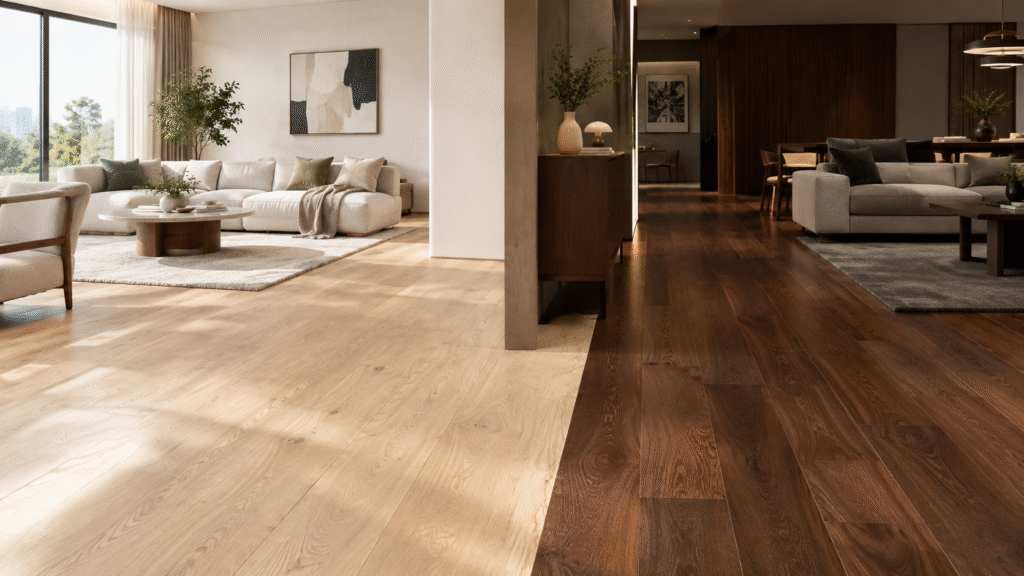
For homeowners who want the wooden look without the maintenance demands of solid wood, luxury vinyl flooring and vinyl plank flooring are increasingly popular in Indian homes — particularly in kitchens, bathrooms, and rental properties.
Why choose vinyl flooring in India:
- 100% waterproof — ideal for humid coastal cities and monsoon-prone regions.
- More affordable than solid oak flooring, with realistic wood-look finishes.
- Available in the full spectrum of light and dark tones, including herringbone-pattern vinyl.
- Lower maintenance than natural wood — no polishing or refinishing required.
Light vinyl plank flooring suits budget-conscious apartment renovations, while dark vinyl flooring is popular in commercial spaces, cafés, and accent areas where a bold look is desired without the cost of solid wood.
Factors to Consider Before Choosing
- Room size and ceiling height — smaller or low-ceiling rooms generally suit light wooden flooring.
- Natural light availability — south/west-facing rooms with strong sunlight can carry dark flooring well; north-facing or shaded rooms often look better light.
- Household lifestyle — homes with pets, young children, or high footfall should lean lighter to minimise visible wear.
- Climate and region — coastal and high-humidity regions benefit from engineered wood or vinyl flooring over solid hardwood, regardless of tone.
- Furniture and wall colour — dark walls pair beautifully with light floors, and vice versa, for balanced contrast.
- Long-term resale value — light to mid-toned wooden flooring tends to appeal to a wider pool of Indian home buyers.
Cost Comparison in India
Pricing varies by material, finish, and city, but as a general guide:
| Flooring Type | Approx. Price Range (per sq. ft., India) |
|---|---|
| Vinyl plank flooring | ₹80 – ₹250 |
| Luxury vinyl flooring (premium) | ₹150 – ₹350 |
| Engineered oak wood flooring | ₹350 – ₹800 |
| Solid oak flooring | ₹600 – ₹1,200+ |
| Herringbone/parquet wooden flooring | ₹700 – ₹1,500+ |
Note: Prices vary based on brand, plank thickness, finish, and installation charges. Get a custom quote for your project’s exact specifications.
Dark and light finishes are generally priced the same within a material category — the cost driver is the material and construction (solid vs engineered), not the colour itself.
Installation & Maintenance Tips
- Acclimatize wooden flooring to room humidity for 48–72 hours before installation, especially important in India’s variable climate.
- Use matte or satin finishes on dark floors to reduce the visibility of dust and micro-scratches.
- Sweep or vacuum light-coloured floors every 2–3 days; dark floors benefit from daily dry cleaning in high-traffic homes.
- Avoid excess water on solid wood; use a slightly damp microfiber mop only, and opt for vinyl flooring in wet areas like kitchens and bathrooms.
- Use felt pads under furniture legs on both light and dark floors to prevent scratches.
- Re-coat or refinish oak wood flooring every 7–10 years depending on foot traffic to maintain its finish and colour depth.
Common Mistakes to Avoid
- Choosing floor colour before finalising wall paint and furniture — always sample flooring against your actual room lighting.
- Picking dark flooring for a small, poorly lit room purely because it looked good online or in a showroom.
- Ignoring maintenance realities — dark floors look stunning in photos but require real upkeep in daily Indian household conditions (dust, monsoon humidity).
- Mixing too many wood tones across adjoining rooms, which disrupts visual flow.
- Overlooking the underlying material and focusing only on colour — a poor-quality dark vinyl will show wear faster than a well-made light oak floor.
Expert Recommendation
At OAKA Floors, our general guidance to clients is this: let the room lead the decision, not the trend. For open-plan apartments, bedrooms, and homes with pets or children, light to medium wooden flooring — particularly engineered oak flooring — offers the best balance of style, practicality, and resale value in the Indian context. For formal living rooms, studies, or statement entryways with good natural light, a dark herringbone wooden flooring or walnut-toned parquet flooring can be a stunning, durable choice if you’re prepared for slightly more frequent cleaning.
Many of our clients also choose a hybrid approach — a light base tone through main living areas with a darker wooden or vinyl accent in a foyer or feature wall, giving the best of both without compromising on everyday livability.
Buying Guide Checklist
Before you finalize your flooring:
- Have I tested samples in my room’s actual lighting (morning and evening)?
- Does the tone suit my room size and ceiling height?
- Have I checked humidity/waterproofing needs for this specific room?
- Does the shade complement my existing or planned wall colour and furniture?
- Have I compared solid oak, engineered oak, and vinyl plank flooring options for this space?
- Do I understand the maintenance commitment for the tone I’ve chosen?
- Have I got a detailed quote covering material, installation, and finishing?
Conclusion
There’s no single “better” answer in the light vs dark flooring debate — the right choice depends on your room’s size, light exposure, lifestyle, and how much maintenance you’re realistically willing to commit to. Light wooden flooring offers everyday practicality and broad appeal, while dark flooring delivers drama and formality for the right space. What matters most is choosing quality material — whether that’s premium oak flooring, engineered oak wood flooring, or durable luxury vinyl flooring — that’s built to perform in Indian conditions.
Ready to see these tones in your own space? Explore OAKA Floors‘ collection of oak, herringbone, parquet, and vinyl plank flooring, or get in touch with our team for a personalised consultation and sample viewing.
FAQ Section
Is luxury wooden flooring worth it for homes with kids and pets?
Yes. With a hard wood species like oak, a matte or UV-cured finish, and basic care habits like trimmed pet nails and furniture pads, wooden flooring holds up well in active family homes.
Which is more durable — solid or engineered oak flooring?
Engineered oak flooring is generally more durable for Indian conditions because its layered construction resists humidity-driven warping better than solid wood, while still offering a real oak surface.
Does oak flooring scratch easily?
Oak resists scratching better than softer woods due to its hardness and visible grain, but scratch resistance ultimately depends more on the finish type than the wood species alone.
How long does luxury wooden flooring last?
With proper installation and maintenance, engineered oak flooring typically lasts 20–30 years, while solid oak flooring can last 50+ years and be refinished multiple times.
Can luxury wooden flooring be installed over existing tiles?
In many cases, yes — engineered click-lock flooring can often be installed over a level, stable tile subfloor with a suitable underlay, subject to a professional site assessment.
Is wooden flooring suitable for the Indian climate?
Yes, particularly engineered wooden flooring, which is more dimensionally stable in humidity and temperature swings than solid wood. Proper acclimatization and underlay are essential.