
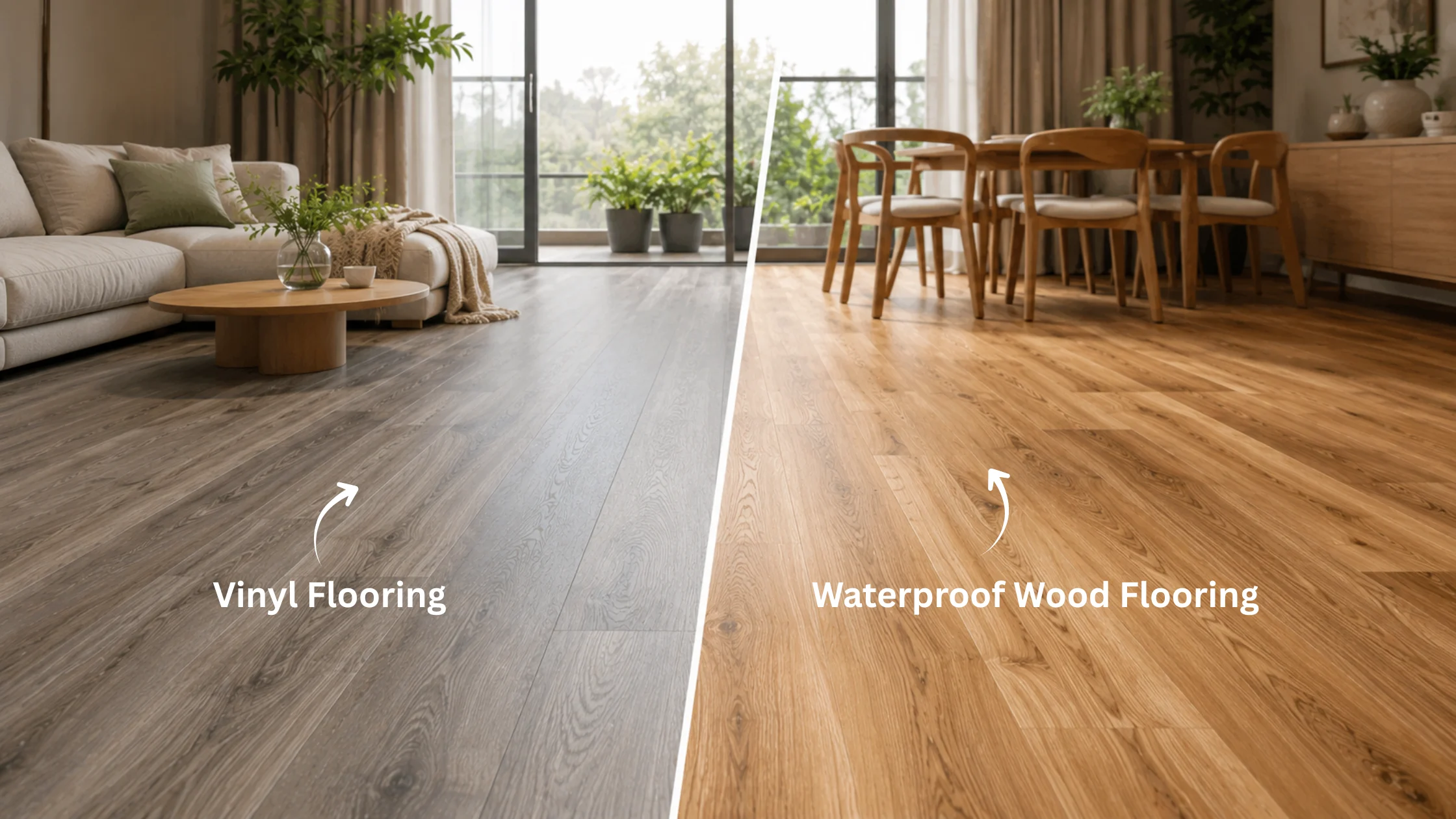
The Flooring Dilemma Every Indian Homeowner Faces
You’ve shortlisted your dream apartment in Bengaluru. The builder hands you a choice: vinyl flooring or waterproof wood flooring. Both look beautiful in the showroom. Both promise durability. But India’s climate — the monsoons in Mumbai, the dry summers in Delhi, the humidity in Chennai — means what works in a European home can fail catastrophically here.
This guide cuts through the noise. Whether you’re renovating a 2BHK in Pune, designing a luxury villa in Hyderabad, or fitting out a commercial space in Gurugram, here’s everything you need to make the right flooring decision — with real costs, real maintenance realities, and expert insights drawn from the Indian market.
What Exactly Is Vinyl Flooring?
Vinyl flooring is a synthetic, multi-layer flooring product made primarily from PVC (polyvinyl chloride). It’s engineered to mimic the appearance of natural wood, stone, or tile — but at a fraction of the cost and with superior water resistance.
The Four Layers of Modern Vinyl Flooring
Modern luxury vinyl flooring (LVF) — particularly vinyl plank flooring — is far more sophisticated than the sheet vinyl of the 1990s. It typically consists of:
- Wear Layer — A transparent, scratch-resistant top coat (measured in mils; higher = more durable)
- Design/Print Layer — A high-resolution photographic film that replicates wood grain, stone, or tile textures
- Core Layer — Either SPC (Stone Plastic Composite) or WPC (Wood Plastic Composite); this determines rigidity and sound absorption
- Backing Layer — Provides cushioning, moisture barrier, and stability
SPC core vinyl is denser and more rigid — ideal for high-traffic areas and rooms prone to temperature swings, like Indian living rooms with AC running through summer.
WPC core vinyl is slightly softer underfoot and quieter — better suited for bedrooms where comfort matters more than heavy-duty resilience.
What Is Waterproof Wood Flooring?
Waterproof wood flooring is an engineered hardwood product that combines a real wood veneer (often oak wood flooring or teak) with a multi-ply plywood or HDF core, then treated with specialized waterproof sealants, UV coatings, or water-repellent finishes.
It’s critical to understand: no solid hardwood is truly 100% waterproof. What the market calls “waterproof wood flooring” is almost always engineered wooden flooring — real wood on top, engineered stability beneath.
Why Engineered Waterproof Wooden Flooring Works Better in India
India’s humidity levels fluctuate dramatically between seasons. Solid hardwood expands and contracts with moisture changes, leading to warping, cupping, and gaps over time. Engineered waterproof wood flooring, by contrast, uses cross-ply construction that resists this dimensional movement — making it far more stable for Indian conditions.
Leading options include premium wooden flooring collections in oak, walnut, and acacia — including oak flooring and parquet flooring patterns that bring old-world European elegance to Indian interiors.
Quick Comparison: Vinyl Flooring vs Waterproof Wood Flooring
| Feature | Vinyl Flooring (LVF/SPC) | Waterproof Wood Flooring |
|---|---|---|
| Material | Synthetic PVC | Real wood veneer + engineered core |
| Water Resistance | 100% waterproof | Water-resistant (not fully waterproof) |
| Appearance | Mimics wood realistically | Genuine wood look and feel |
| Underfoot Feel | Slightly hollow/plastic feel | Warm, natural, premium feel |
| Durability | 15–25 years | 20–30+ years (refinishable) |
| Cost (India) | ₹80–₹250/sq ft | ₹150–₹600/sq ft |
| Installation | DIY-friendly, click-lock | Professional recommended |
| Maintenance | Very low | Low-moderate |
| Refinishing | Not possible | Yes (engineered with thick veneer) |
| Eco-friendliness | Lower (plastic-based) | Higher (natural wood) |
| Best For | Kitchens, bathrooms, high-traffic | Living rooms, bedrooms, luxury spaces |
| Resale Value Impact | Moderate | High |
Vinyl Flooring for Indian Homes: Pros, Cons & Best Use Cases
Advantages of Vinyl Flooring in India
1. Truly Waterproof — A Game-Changer for Monsoon-Prone Regions Unlike most flooring options, luxury vinyl flooring is 100% waterproof throughout its entire thickness. In cities like Mumbai, Kolkata, or Kochi where monsoon flooding and high ambient humidity are realities, this matters enormously. Water won’t seep through, swell the planks, or cause mold beneath the surface.
2. Exceptional Durability in High-Traffic Homes Indian households often see significantly more foot traffic than Western homes — extended families, domestic help, frequent social gatherings. A quality vinyl plank flooring with a 12-mil or higher wear layer handles this superbly. Scratches from furniture movement, pet nails, and daily wear are far less visible than on real wood.
3. Significantly Lower Cost Entry-level vinyl flooring starts at approximately ₹80–₹120 per sq ft in India, with premium luxury vinyl flooring collections ranging from ₹150–₹250 per sq ft installed. For a 1,000 sq ft apartment, that’s a meaningful saving compared to engineered wood.
4. Easier and Faster Installation Most modern vinyl plank flooring uses a click-lock floating installation system. It installs directly over existing floors — tiles, concrete, even old vinyl — without adhesives, nails, or extensive subfloor preparation. This reduces both cost and renovation downtime significantly.
5. Comfortable Underfoot and Thermally Efficient WPC-core vinyl has a slight cushioning effect. When combined with underfloor heating (increasingly popular in premium Indian apartments), certain vinyl products perform well, though always verify the manufacturer’s thermal resistance specifications.
6. Low Allergen Retention Unlike carpet, vinyl doesn’t trap dust mites, pollen, or pet dander — a significant advantage for allergy-prone family members and in dusty Indian cities.
Disadvantages of Vinyl Flooring
- Cannot Be Refinished: Once the wear layer scratches through, the plank must be replaced. You cannot sand and refinish vinyl the way you can engineered wood.
- Feels Less Premium: Even the best embossed luxury vinyl flooring doesn’t fully replicate the warmth, acoustic depth, and tactile quality of real wood underfoot.
- Heat Sensitivity: Cheaper vinyl can soften slightly in extreme heat. In Indian summers, rooms without AC may cause lower-quality vinyl to expand and buckle.
- Environmental Concerns: PVC production involves chemicals. Some vinyl flooring may off-gas VOCs initially, though reputable brands test to low-emission standards.
- Doesn’t Add the Same Resale Premium: Real estate agents in India consistently note that genuine premium wooden flooring commands a higher buyer perception and resale premium than vinyl.
Waterproof Wood Flooring for Indian Homes: Pros, Cons & Best Use Cases
Advantages of Waterproof Wooden Flooring in India
1. Genuine Beauty That Vinyl Cannot Fully Replicate There is simply no substitute for the warmth, grain variation, and tactile richness of real wooden flooring. Every plank of oak wood flooring has a unique character — knots, colour variation, grain direction — that makes the floor feel alive. This is especially valued in luxury wooden flooring solutions for premium residences and hospitality projects.
2. Long-Term Value and Refinishability A quality engineered waterproof wood flooring with a 3mm+ veneer layer can be sanded and refinished 2–3 times over its lifetime. A floor installed today can look brand new again in 15 years with professional refinishing — something vinyl can never offer.
3. Stable Performance with Engineered Construction Modern engineered premium wooden flooring uses cross-ply plywood or HDF cores that dramatically reduce expansion and contraction compared to solid hardwood. This makes them far better suited to India’s climate than traditional hardwood, while retaining the genuine wood surface.
4. Design Versatility — Including Parquet and Herringbone Engineered wood unlocks format possibilities that vinyl struggles to match convincingly. Parquet flooring in geometric patterns and herringbone wooden flooring in classic V-patterns are experiencing a massive resurgence in Indian luxury interiors — from penthouse apartments to boutique hotels. The visual complexity and craftsmanship these patterns project cannot be replicated with synthetic materials.
5. Significant Contribution to Home Resale Value Across Indian real estate markets — Delhi NCR, Mumbai, Bengaluru, Pune — quality wooden flooring consistently adds measurable resale value. Buyers in the premium segment (₹1.5 crore+ properties) expect real wood floors and perceive them as a marker of quality construction.
6. Natural Thermal Comfort Wood is a natural insulator. In cooler months, wooden floors feel warmer underfoot than tiles or vinyl, reducing the need for supplementary heating in northern Indian cities.
Disadvantages of Waterproof Wooden Flooring
- Higher Initial Investment: Quality engineered oak flooring or walnut starts at ₹200–₹350 per sq ft, with premium collections from specialist brands reaching ₹500–₹800 per sq ft installed.
- Not Fully Waterproof: Even with waterproof treatments, prolonged standing water — flooding, severe leaks — can damage wooden flooring. It’s water-resistant, not submersible.
- Requires Professional Installation: Floating, glue-down, or nail-down installation all benefit from professional execution to prevent issues like squeaking, gapping, or improper acclimatisation.
- Needs Acclimatisation: Engineered wood must be allowed to acclimatise to the room’s temperature and humidity for 48–72 hours before installation — a step many rushed renovations skip, causing problems later.
- Maintenance Requires Care: Damp mopping is fine; wet mopping is not. Spills must be wiped promptly. High heels and abrasive cleaning tools can damage the wood surface.
Room-by-Room Recommendation: What Works Where in Indian Homes
Kitchen
Verdict: Vinyl Flooring Wins Indian kitchens see oil spills, water, and heavy foot traffic daily. Vinyl plank flooring — especially SPC core — handles all of this without hesitation. Waterproof wood flooring, despite its water-resistant coating, risks damage from sustained moisture exposure in cooking zones.
Bathrooms and Wet Areas
Verdict: Vinyl Flooring Only No wood-based product, however treated, belongs in a wet bathroom. Go with luxury vinyl flooring here without exception.
Living Room and Dining Room
Verdict: Waterproof Wood Flooring Preferred These are the showpiece spaces of an Indian home. Herringbone wooden flooring or wide-plank oak wood flooring makes an unforgettable design statement. If budget is a concern, high-quality vinyl plank flooring with realistic wood embossing is a credible alternative.
Master Bedroom
Verdict: Waterproof Wood Flooring The warmth, quiet, and premium feel of premium wooden flooring enhances the bedroom experience. Parquet flooring in herringbone or basketweave patterns is particularly popular in luxury bedroom interiors.
Children’s Room and Play Areas
Verdict: Vinyl Flooring Spill-proof, scratch-resistant, easy to clean, and forgiving of everything children do — luxury vinyl flooring is the practical choice here.
Home Office
Verdict: Either Works — Depends on Budget Both perform well. Premium engineered oak flooring elevates the office environment and photographs beautifully for video calls. Vinyl plank flooring is the cost-effective, durable alternative.
Balconies and Outdoor-Adjacent Areas
Verdict: Vinyl Flooring (SPC Core) Indian balconies experience direct rain, humidity, and UV exposure. SPC-core vinyl flooring handles this; wood flooring does not.
Installation Guide: What Indian Homeowners Need to Know
Vinyl Flooring Installation
Floating (Click-Lock): The most common method. Planks click together without adhesive and “float” over the subfloor. Works over tiles, concrete, and existing floors provided they’re flat (within 3mm over 1.8m).
Glue-Down: Used in high-traffic commercial applications or where extra stability is needed. More permanent; requires adhesive and longer installation time.
Key Pre-Installation Steps:
- Ensure subfloor is clean, dry, and level
- Maintain room temperature between 18–29°C during installation
- Allow vinyl to acclimatise for 24 hours in the room
- Leave 10mm expansion gap around all walls and fixed objects
Waterproof Wood Flooring Installation
Floating Installation: Planks click or are glued edge-to-edge and float over underlay. Most commonly used for engineered wood in Indian residential settings.
Glue-Down Installation: Every plank is bonded to the subfloor. More stable, eliminates hollow sound, but more complex and permanent.
Key Pre-Installation Steps:
- Acclimatise flooring in the room for 48–72 hours — non-negotiable in humid Indian conditions
- Subfloor moisture content must be below 12% (use a moisture meter)
- Concrete subfloors may need a moisture barrier
- Hire professionals for herringbone and parquet patterns — these require precise layout planning
Maintenance: Day-to-Day Care in Indian Conditions
Caring for Vinyl Flooring
- Daily: Sweep or dust mop to remove grit that can act as an abrasive
- Weekly: Damp mop with a PH-neutral floor cleaner (avoid harsh chemicals that degrade the wear layer)
- Avoid: Steam mops (heat can warp some vinyl), abrasive scrubbers, solvent-based cleaners
- Spills: Wipe immediately; no special action needed given full waterproofing
- During Monsoon: No special precautions needed — this is where vinyl shines
Caring for Waterproof Wooden Flooring
- Daily: Sweep or use a dry/lightly damp microfibre mop
- Weekly: Clean with a specifically formulated wooden floor cleaner — never general-purpose floor cleaner
- Avoid: Wet mopping, steam mops, excessive water, ammonia or bleach-based products
- Spills: Wipe immediately and dry the area thoroughly
- During Monsoon: Maintain indoor humidity between 35–55% using dehumidifiers or AC; monitor edges of planks near doorways
- Annual: Inspect and re-apply wood floor polish or hardwax oil if sheen has diminished
Design Trends: What’s Popular in Indian Interiors Right Now
Herringbone and Parquet Flooring — The Luxury Statement
Herringbone wooden flooring is experiencing an enormous revival across Indian luxury residential and hospitality projects. The V-shaped interlocking pattern adds visual dynamism and architectural interest to otherwise simple rooms. Parquet flooring in basketweave and chevron variations is equally sought-after.
Wide-Plank Oak Flooring — Understated Elegance
Wide-format oak wood flooring planks (180mm+) are favoured in contemporary minimalist Indian interiors. The fewer visible seams create an expansive, uninterrupted floor plane that makes spaces feel larger — a genuine advantage in Indian apartments where square footage is often limited.
Light-Toned Natural Finishes
Light ash, white oak, and blonde wood tones are dominating Indian luxury residential projects in 2025. These tones pair beautifully with white walls, concrete accents, and the abundant natural light of south-facing Indian homes.
SPC Vinyl in Realistic Wood Formats
For budget-conscious buyers who want the look without the cost, high-end vinyl plank flooring with deep embossing, realistic grain textures, and warm colour palettes is bridging the gap more effectively than ever before.
Choosing OAKA Floors: Expert-Curated Flooring for the Indian Market
When selecting flooring for Indian conditions, the supplier matters as much as the product. OAKA Floors brings together a curated collection of premium wooden flooring, luxury vinyl flooring, and luxury wooden flooring solutions specifically chosen for performance in India’s diverse climate zones.
OAKA Floors offers oak wood flooring and parquet flooring collections that balance Old World craftsmanship with modern engineering — including engineered options designed to withstand Indian humidity and temperature cycles. Their herringbone wooden flooring collections are particularly popular in premium residential and boutique hospitality projects across India.
What sets specialist suppliers like OAKA Floors apart is category expertise. Their team understands the difference between a specification that works in Stuttgart and one that performs in Surat — and can guide homeowners through the right product for their specific room, climate zone, and lifestyle.
Common Mistakes Indian Homeowners Make When Choosing Flooring
1. Prioritising Price Over Total Cost of Ownership A ₹90/sq ft vinyl floor that needs replacing in 8 years costs more over 20 years than a ₹300/sq ft engineered wood floor that refinishes once and lasts 25 years. Always calculate total lifecycle cost, not just initial cost.
2. Skipping Acclimatisation for Wood Flooring This is the single most common cause of wooden floor failure in India. Skipping the 48–72 hour acclimatisation period — because contractors are in a hurry — causes wood to expand and buckle after installation as it adjusts to room conditions.
3. Choosing the Wrong Product for Wet Areas Water-resistant is not waterproof. Wood flooring — however treated — does not belong in wet bathrooms or near floor drains. Use vinyl in these zones.
4. Ignoring Subfloor Preparation A ₹500/sq ft wooden floor installed over an uneven or damp subfloor will fail. Proper subfloor preparation — levelling, moisture testing, and if needed, a moisture barrier — is non-negotiable.
5. Buying Without Checking Wear Layer Thickness (Vinyl) or Veneer Thickness (Wood) For vinyl: below 6 mil wear layer is inadequate for most Indian homes. For engineered wood: a veneer thinner than 2mm cannot be refinished and limits the floor’s lifespan.
6. Not Accounting for Indian Climate Zones Coastal cities (Mumbai, Chennai, Kochi) need moisture management regardless of flooring type. North Indian cities with extreme seasonal temperature ranges need products with stable cores. A specialist supplier calibrates recommendations to these realities.
Buying Guide: How to Choose Between Vinyl and Wood Flooring
Choose Vinyl Flooring if:
- Your budget is ₹150–₹250/sq ft all-inclusive
- The room is a kitchen, bathroom, laundry, or balcony
- You have young children or pets with unpredictable behaviour
- You’re in a high-humidity coastal city and want zero maintenance anxiety
- You’re furnishing a rental property where durability and easy replacement matter more than aesthetics
Choose Waterproof Wood Flooring if:
- Your budget allows ₹300–₹600+/sq ft
- The room is a living room, dining room, master bedroom, or study
- You value long-term investment and potential refinishability
- You want herringbone wooden flooring or parquet flooring design impact
- The property is a luxury residence, premium office, or hospitality space where real wood makes a measurable impression
- You intend to live in the property for 10+ years and want a floor that improves with age
The Hybrid Approach (Recommended for Full Homes): Many architects and interior designers in India now recommend a category-by-category approach:
- Wet areas and service zones → Luxury vinyl flooring (SPC)
- Living, dining, bedrooms, study → Premium wooden flooring or oak flooring
This delivers the best of both worlds — complete durability where it’s needed, genuine warmth and beauty where it’s appreciated.
FAQ Section
1. Vinyl vs Waterproof Wood Flooring: Which Should I Choose for My Indian Home?
Vinyl Flooring is ideal for homeowners looking for a budget-friendly, durable, and low-maintenance option with good water resistance. Waterproof Wood Flooring is better for those who want a premium natural wood look, luxury feel, and long-term interior value. The right choice depends on your budget, lifestyle, room usage, and design preference.
2. Will Vinyl Flooring Look Cheap in My House?
No, modern Luxury Vinyl Flooring does not look cheap. High-quality Vinyl Plank Flooring offers realistic wood textures, premium finishes, and stylish designs that can enhance residential and commercial interiors. However, for a more authentic natural wood appearance, options like Oak Wood Flooring provide a richer luxury feel.
3. Is Waterproof Wood Flooring Really Waterproof for Indian Kitchens?
Waterproof Wood Flooring provides strong moisture resistance and is designed to handle Indian climate conditions better than traditional wooden flooring. However, it should not be exposed to continuous standing water. Proper installation and maintenance are important for long-lasting performance.
4. How Much Does Vinyl Flooring Installation Cost?
The cost of Vinyl Flooring installation depends on the flooring quality, room size, installation method, and surface preparation required. The total cost usually includes material, labour, and finishing work. Luxury Vinyl Flooring may have a higher investment because of its premium design, durability, and realistic wood appearance.
5. Should I DIY Vinyl Flooring or Hire a Professional?
DIY Vinyl Flooring installation can work for small areas, but professional installation is recommended for better finishing and long-term performance. Experts ensure proper floor preparation, alignment, and installation quality, helping avoid issues like gaps, uneven surfaces, or early damage.
6. What’s the Average Cost to Install Vinyl Plank Flooring?
The cost to install Vinyl Plank Flooring depends on the product quality, design, installation type, and project size. Premium Vinyl Plank Flooring options may cost more due to better durability, realistic textures, and improved performance. Installation charges and floor preparation also affect the final cost.
7. How Much Does Waterproof Wood Flooring Installation Cost?
The cost of Waterproof Wood Flooring installation depends on the wood quality, flooring design, installation process, and finishing requirements. Premium options like Oak Wood Flooring and luxury wooden flooring solutions may require a higher investment due to their natural appearance, durability, and premium finish.
8. What’s Included in a Flooring Installation Quote?
A flooring installation quote generally includes the flooring material, labour charges, surface preparation, installation process, and finishing requirements. A complete quotation helps homeowners understand the total project cost and avoid unexpected expenses during installation.
9. How Long Does Waterproof Flooring Installation Take?
The installation time for Waterproof Flooring depends on the area size, floor condition, and preparation work required. Small residential projects can be completed faster, while larger homes or commercial spaces may take more time. Professional installation ensures better finishing and durability.
Ready to choose your pattern?
Browse OAKA’s full Vinyl Flooring and Waterproof Wood Flooring collections at OAKA Floor Products – or contact the team for a free consultation and quote.
📞 India: +91 84858 59199
📞 Dubai: +971 5430 05841
📧 hello@oakafloors.com