
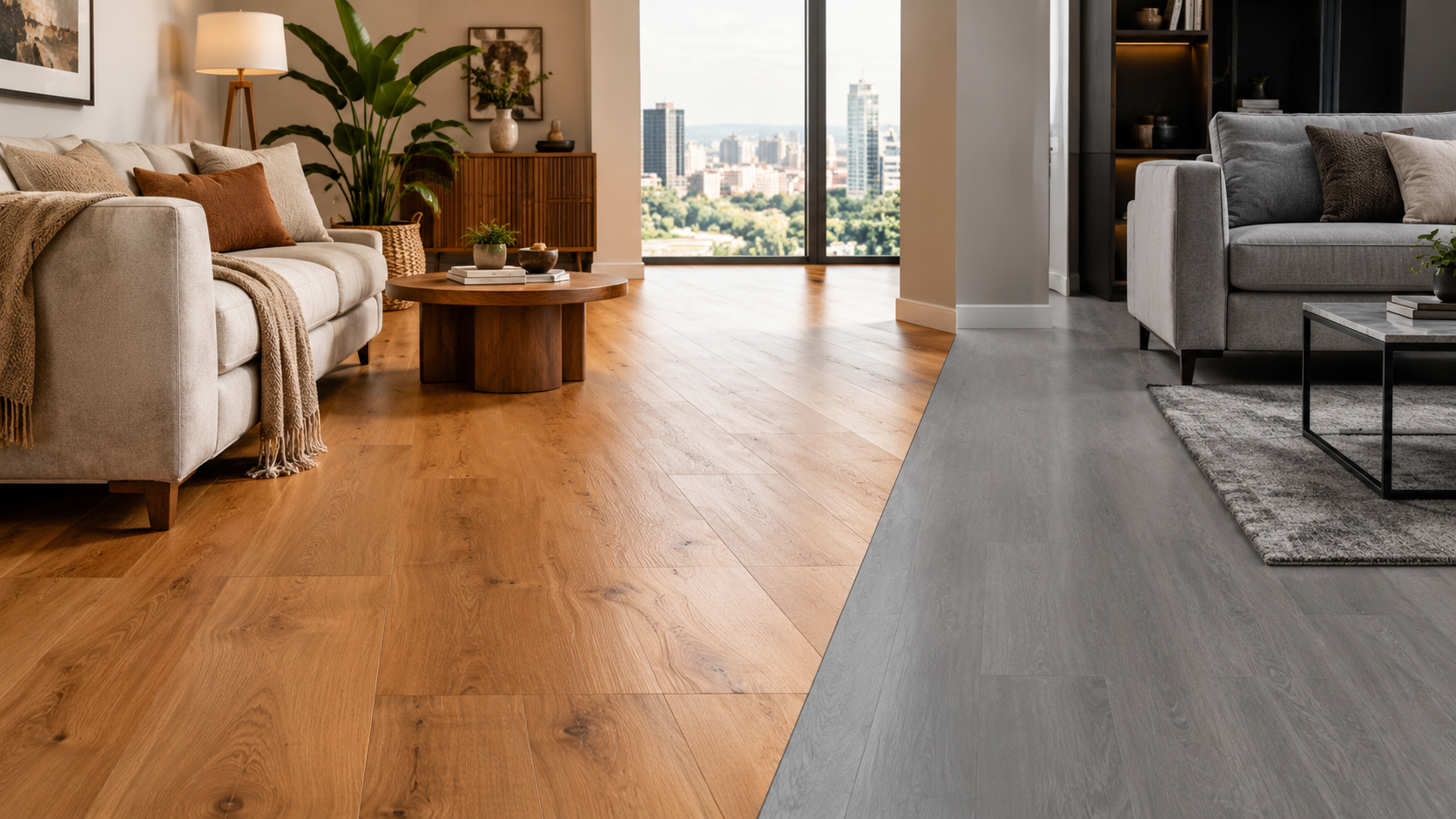
Walk into a newly finished Indian home today and you will notice a quiet change underfoot. The cool grey floors that dominated showrooms for years are being replaced by honey, natural and golden oak tones. Architects, interior designers and homeowners are choosing warmth over a look that now feels cold and dated.
This guide explains why oak flooring in India is growing so quickly, how warm oak compares with grey floors on looks, durability and upkeep, and what to check before you buy. If you are researching wooden flooring India options for a new build or renovation, you will find the practical details here: solid vs engineered construction, installation basics and the mistakes that most often cause floor failures.
Whether you are comparing premium wooden flooring for a villa, apartment, café or boutique, the goal is simple: help you choose a floor that still looks right, and performs well, years from now.
Why is warm oak replacing grey floors in India?
Warm oak flooring suits Indian homes better because its honey, natural and light-brown tones hide dust, soften harsh daylight, pair with Indian furniture and brass or terracotta accents, and age gracefully, while cool grey floors show every footprint, clash with warm Indian light and are already dating as a design trend. For most apartments and villas, engineered oak with a real oak top layer is the practical choice for Indian humidity and heat.
1. What Is Driving Oak Flooring Trends in India
For about a decade, grey was the default “modern” floor: grey vitrified tiles, grey laminates, grey-washed planks. In 2025 and 2026, designers and homeowners are visibly moving the other way. The strongest oak flooring trends in India share one theme: warmth.
Three forces explain the shift.
- Biophilic and wellness-led design. Buyers want homes that feel calm and natural. Real wood is the most direct way to get that.
- Maturing premium housing. As more buyers move into villas, penthouses and larger apartments, spend is shifting from cheap finishes to premium wooden flooring that adds lasting value.
- Social media fatigue with grey. Cool, flat greys photograph as cold in most Indian light. Warm oak photographs as inviting, so it is spreading through Pinterest, Instagram and architect portfolios.
The result: oak flooring in India has moved from a niche import to a mainstream choice for design-conscious homes, boutique offices, cafés and showrooms.
2. Why Grey Floors Are Losing Ground
Grey is not “bad”. It is simply a poor match for how Indian homes are lived in and lit.
- Light mismatch. Indian daylight is strong and warm. Cool grey reads flat or slightly blue next to it, especially in west-facing rooms.
- Dust visibility. Mid-grey shows pale dust, chalky footprints and water marks quickly, which matters in homes with open windows and daily sweeping or mopping.
- Furniture and décor clash. Teak, sheesham, cane, brass, terracotta, jute and traditional textiles sit naturally on warm tones. On grey, they can look mismatched.
- Trend ageing. Heavily grey-washed finishes are strongly associated with one design era. Natural oak tones are more timeless.
- Resale perception. A genuinely natural wooden floor tends to read as higher quality than a printed grey surface.
Grey still works in minimalist, industrial or strongly monochrome interiors. The shift is about where the majority of buyers are heading, not a ban on grey.
3. What Counts as Warm Oak Flooring
Warm oak flooring generally means oak in natural, honey, light golden, soft tan or light brown tones, often with a matte or oil-style finish that keeps the grain visible.
Common warm oak looks in India right now:
- Natural oak: Light and honey-toned, bright and airy. Excellent for compact apartments.
- Golden or honey oak: Richer, welcoming warmth for living rooms and bedrooms.
- Smoked or toasted oak: Deeper brown with warmth; good for statement spaces without turning dark and heavy.
- Brushed or wire-brushed oak: Texture that hides minor scratches and feels premium underfoot.
- Wide plank and long board formats: Fewer joints, a calmer look and a more luxurious feel.
- Herringbone and chevron: Classic patterns that elevate entryways and living areas.
Why oak specifically? Oak is one of the most recognised hardwoods worldwide: strong, dense, stable, with an attractive open grain that takes stain and oil finishes well. That balance of durability and beauty is why Oak Wood Flooring remains the benchmark for premium wooden flooring.
4. Oak vs Grey Flooring: Comparison Table
4. Oak vs Grey Flooring: Comparison Table
| Factor | Warm Oak Flooring | Grey Floors (Laminate, Vinyl, Grey-Wash, Tiles) |
|---|---|---|
| Look in Indian daylight | Warm, rich, natural | Can look cool, flat or dull |
| Dust and footprint visibility | Low to moderate, grain hides it | Moderate to high on mid-greys |
| Material authenticity | Real oak (solid or real oak top layer) | Often printed or synthetic |
| Feel underfoot | Warm, slightly cushioned | Cold (tile) or hollow (some laminates) |
| Longevity | 20 to 30+ years with care; many engineered boards can be refinished | 5 to 15 years typical for laminate or vinyl |
| Refinishing | Possible (depth depends on top layer) | Rarely possible |
| Design timelessness | High | Trend-dependent |
| Initial cost | Higher | Lower to moderate |
| Lifetime value | Strong | Lower, replacement cycle is shorter |
| Humidity sensitivity | Needs correct product and installation | Vinyl and tile handle moisture well |
Takeaway: Grey wins on upfront price and moisture tolerance. Warm oak wins on look, feel, lifespan and long-term value. That is the real reason premium buyers are switching.
5. Where Warm Oak Works Best
- Living and dining rooms: The most visible space, where oak makes the strongest impression.
- Bedrooms: Warm underfoot, quieter and calmer than tile.
- Home offices: Acoustic comfort and a professional look.
- Boutique retail, cafés and showrooms: Warm oak flooring improves perceived quality and dwell time.
- Hotel rooms and serviced apartments: Appeals to premium guests.
Use with caution: Kitchens (spills), bathrooms and open balconies. Choose tile or high-quality waterproof alternatives there, or transition cleanly between materials.
6. Installation: What Actually Matters
Most oak floor failures in India trace back to installation, not the wood.
- Moisture testing. Test the concrete slab and walls before installing. Fresh screed or seasonal dampness can ruin a floor.
- Subfloor flatness. Aim for roughly 3 mm variation over 2 metres; level as needed.
- Acclimatisation. Let planks rest in the room (usually 48 to 72 hours, or as the manufacturer instructs).
- Moisture barrier. Use a quality damp-proof membrane over concrete.
- Method. Glue-down, floating or nail-down depends on product and subfloor. Follow the manufacturer’s specification.
- Expansion gap. Leave a perimeter gap hidden by skirting. Without it, boards may buckle in monsoon.
- Timing. Install after painting, plastering, and heavy furniture movement, but before final furnishings.
Always use installers experienced with real wood, not just generic tile or laminate crews.
7. Maintenance in Indian Conditions
- Dry or damp-mop only. Use a well-wrung microfibre mop with a pH-neutral wood cleaner. Never wet-mop or use steam.
- Sweep or vacuum frequently. Dust and grit scratch finishes like fine sandpaper.
- Wipe spills immediately, especially water, tea, oil and turmeric-based food.
- Use felt pads under furniture legs and mats at entrances.
- Control humidity. In monsoon, ventilate or use dehumidifiers; in dry months, avoid extremes in air conditioning.
- Protect from direct sun with curtains or UV-filtering film to prevent uneven colour change.
- Recoat or refinish when the finish dulls (typically every few years in high-traffic areas, depending on finish).
8. Pros and Cons of Oak Wood Flooring
Pros
- Natural beauty with unique grain in every plank
- Warm, comfortable and quiet underfoot
- Durable and often refinishable
- Increases perceived home value
- Timeless colour range that pairs with most interiors
- Sustainably sourced options available (look for FSC or PEFC certification)
Cons
- Higher upfront cost than laminate, vinyl or tile
- Needs sensible moisture control
- Can scratch or dent without care
- Requires skilled installation
- Not ideal for wet zones
9. Buying Guide: Choosing an Oak Wood Flooring Supplier India
The supplier matters as much as the product. Ask these questions before you commit.
- Is it real oak? Ask for the species, origin (for example European oak) and the exact wear layer thickness. “Oak finish” and “oak-look” are not the same as oak.
- What is the core? Multi-layer plywood cores generally outperform cheap fibreboard cores in India’s climate.
- Is there a written warranty, and does it cover Indian climate conditions and professional installation?
- Can you see physical samples in your own lighting?
- Do they provide installation, moisture testing and aftercare guidance?
- Are there certifications for sustainable sourcing and low-emission finishes?
- Can they show completed projects with similar conditions to yours?
- Is stock consistent so extra boxes match in tone later?
A reliable Oak Wood Flooring Supplier India will answer these clearly rather than steer you only on price. OAKA Floors focuses on premium oak flooring, so if you are comparing options, request samples and specifications so you can judge on facts.
10. Common Mistakes to Avoid
- Choosing by photo alone. Oak tone changes with light. Always view samples in your room at different times of day.
- Picking solid oak by default. In many apartments, engineered is the better technical choice.
- Ignoring the subfloor. Skipping moisture tests is the most expensive mistake.
- Buying on the lowest price. A thin veneer cannot be refinished and may wear through early.
- Going too dark. Very dark floors show dust and scratches more. Mid-warm tones are more forgiving.
- Wet mopping. Daily wet cleaning shortens the life of any wooden floor.
- No expansion gap. Leads to lifting and gapping with seasons.
- Skipping a trial area. Check the finish on a sample board with your usual cleaning routine.
11. Expert Recommendations
- Best all-round pick for Indian homes: Engineered oak with a genuine oak wear layer of 3 mm or more, in a natural or light golden tone.
- For small, low-light apartments: Lighter natural oak to open the space.
- For families with kids and pets: Brushed or textured finish with a durable matte coating.
- For luxury statement spaces: Wide planks or herringbone in premium European oak.
- For coastal cities: Prioritise stable engineered construction and rigorous moisture protection.
- Pair it well: Warm oak with off-white walls, brass fixtures, rattan, linen and green plants is a strong current combination.
If you are specifying premium wooden flooring for a project, ask your supplier for technical data sheets, not just brochures.
Conclusion
The move toward warm oak flooring is not a passing fad. It reflects how Indian homes are lit, furnished and lived in. Grey floors delivered a clean, modern look, but warm oak delivers comfort, character and longevity, which is why current oak flooring trends point firmly in its favour. If you are planning a renovation or new build, start with the right construction (usually engineered), insist on genuine oak specifications, and invest in correct installation.
When you are ready to see how natural oak looks in your own space, you can explore OAKA Floors at oakafloors.com and request samples or a consultation to compare tones in your own light.
FAQ Section
Why is warm oak flooring becoming more popular than grey in India?
Warm oak flatters Indian daylight, hides dust better, matches common furniture and décor, and looks more timeless. Grey tends to feel cold and is increasingly seen as a dated trend.
Is oak flooring good for Indian weather?
Yes, if you choose engineered oak and install it correctly with moisture protection and expansion gaps. Solid oak needs more careful climate control.
What affects the cost of oak flooring in India?
Cost depends on oak grade, plank width, wear layer thickness, finish, pattern, subfloor preparation and your city. Request a written quote for your space from the supplier.
Is engineered oak better than solid oak in India?
For most apartments and humid cities, yes. Engineered oak is more dimensionally stable while still offering real oak on the surface.
How long does oak wood flooring last?
With proper care, 20 to 30 years or more. Floors with a thicker wear layer can be refinished to extend life further.
Can oak flooring be used in kitchens or bathrooms?
It is not recommended for wet areas. Use tile or waterproof flooring in bathrooms and take care with spills in kitchens.
Is oak flooring termite-resistant?
Oak is not inherently termite-proof. Good subfloor treatment, moisture control and proper installation are essential.
How do I clean and maintain oak floors?
Sweep or vacuum regularly, damp-mop with a wood-safe cleaner, wipe spills immediately, use mats and felt pads, and avoid steam.
What is the best colour of oak for Indian homes?
Natural, light golden and honey tones are the most versatile. They brighten rooms and complement both modern and traditional interiors.
How do I find a trustworthy Oak Wood Flooring Supplier India?
Check for real oak specifications, transparent wear layer thickness, warranty, project references, installation support and willingness to provide physical samples.