
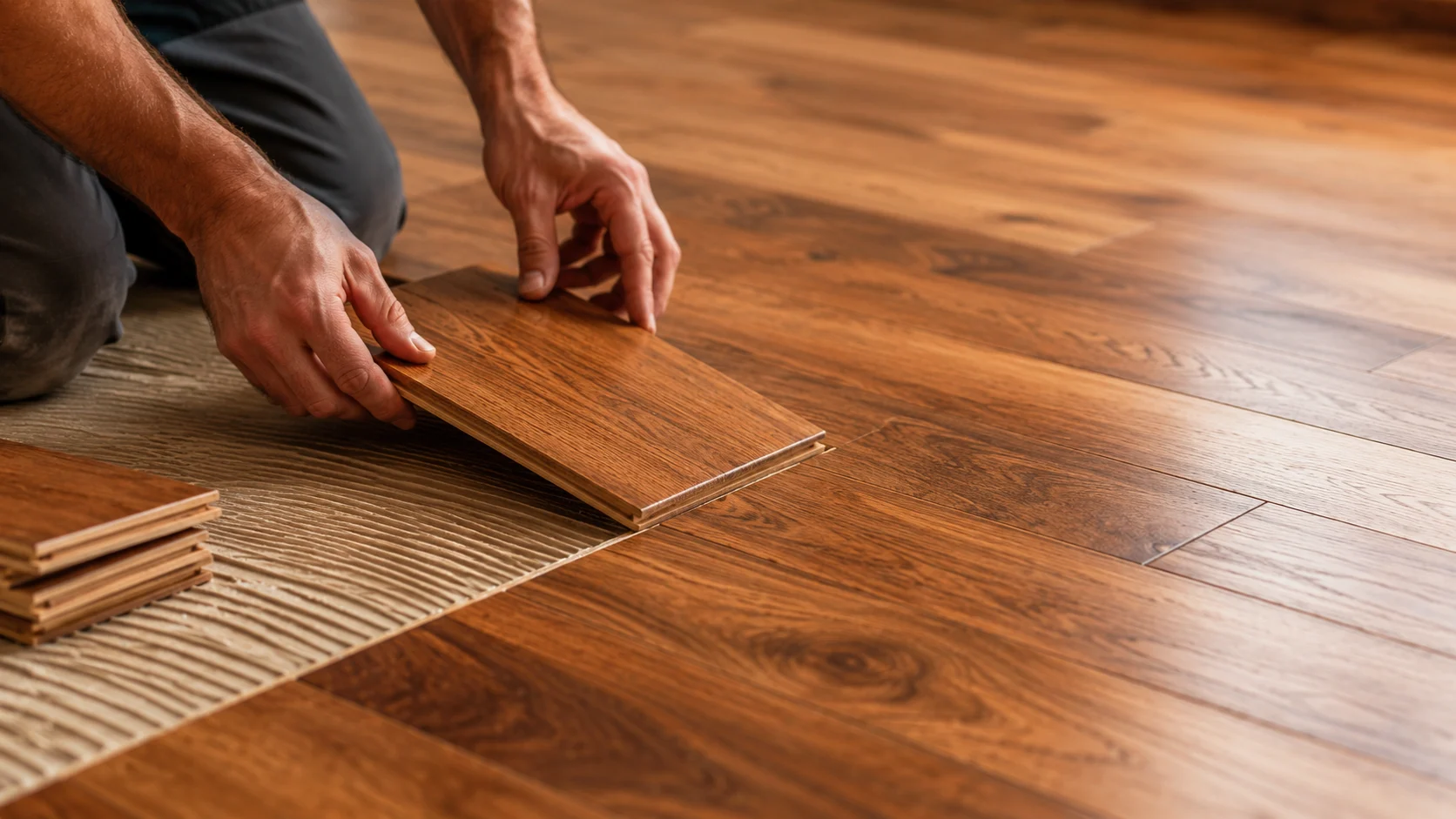
The Waterproof Wood Flooring Confusion
Why This Matters More Than Homeowners Realize
Most homeowners judge flooring by how it looks in the showroom — the grain, the finish, the colour tone. A trained installer looks at the house first, not just the wood. Wooden flooring is a living material. It expands, contracts, and reacts to its environment long after installation. The gap between an average job and a truly durable one usually comes down to what happens before the first plank is even placed.
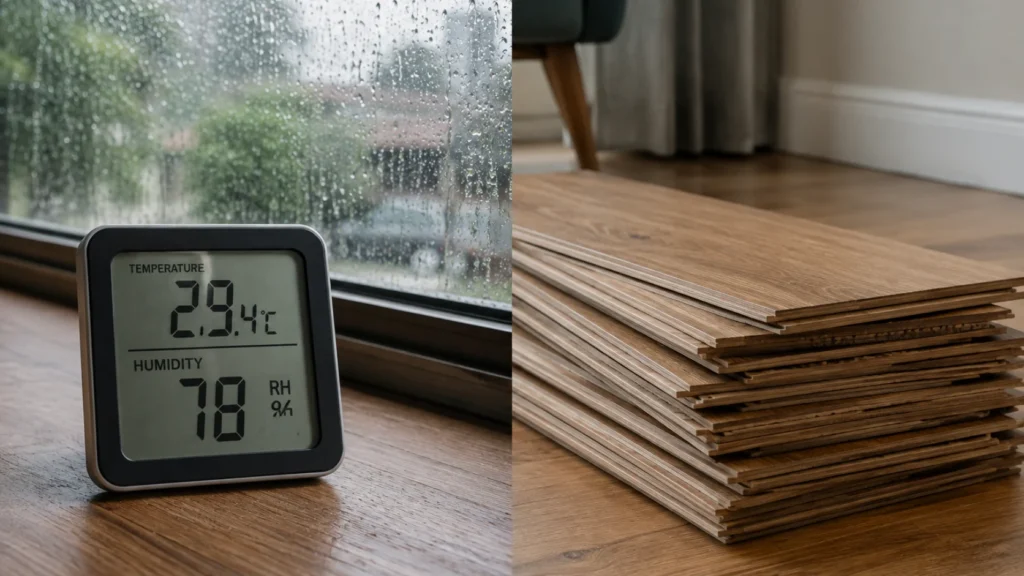
This is exactly why Wooden Flooring Installation Services exist as a specialized trade, not a DIY weekend project. Indian homes, in particular, deal with humidity swings between monsoon and summer that can be 40–50% RH apart — a range that untrained installation simply doesn’t account for.
A professional wooden flooring installer checks things most homeowners never think about — subfloor moisture, room humidity, floor levelness, acclimatization time, expansion gaps, and plank direction relative to natural light and room layout. Skipping these checks is the leading cause of gaps, cupping, and creaking in wooden floors within the first year. Choosing experienced Wooden Flooring Installation Services, like those offered by OAKA Floors, ensures these details are handled before installation day, not fixed after the damage is done.
8 Things a Professional Installer Checks (That Homeowners Skip)
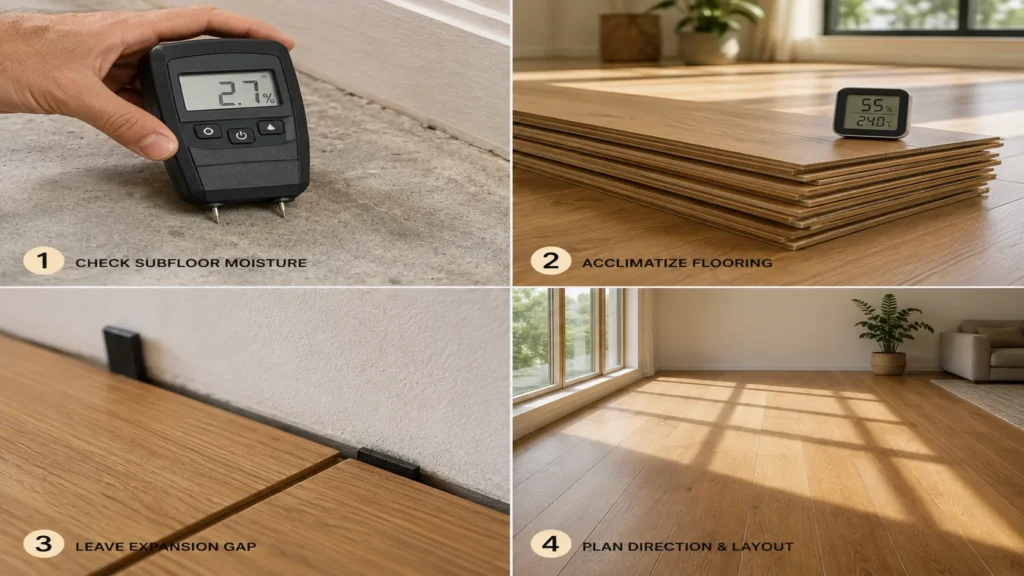
1. Subfloor Moisture Content
Before any wooden flooring touches the ground, a professional tests the subfloor’s moisture level using a moisture meter. Concrete subfloors in Indian construction often retain moisture for months after casting, even when they look and feel dry.
- What happens if skipped: Trapped moisture causes cupping, buckling, or mould growth under the floor.
- What a pro does: Waits for readings within acceptable range (typically under 4-5% for concrete) or installs a moisture barrier.
2. Room Humidity & Acclimatization
Wood needs time to adjust to the room’s ambient humidity before installation — usually 48 to 72 hours, sometimes longer in coastal or high-humidity cities like Mumbai or Chennai.
- Homeowner assumption: “The wood is dry, so it’s ready to install.”
- Reality: Wood that isn’t acclimatized will expand or shrink after installation, causing visible gaps or buckling within weeks.
3. Subfloor Levelness
A floor that looks flat to the eye can still have dips of several millimetres. Professionals check this with a laser level or straightedge.
- Uneven subfloors cause hollow sounds, creaking, and uneven wear patterns over time.
- Levelling compound or plywood underlayment is used to correct this before laying premium wooden flooring.
4. Expansion Gaps Along the Perimeter
Wood expands with humidity and heat. A professional always leaves a small gap (usually 10-15mm) around the room’s edges, hidden later under skirting or beading.
- Skipping this is one of the most common causes of buckled floors during Indian summers.
5. Direction of the Planks
An experienced installer decides plank direction based on:
- The direction of natural light (planks parallel to the main light source visually elongate a room)
- The layout and shape of the room
- The direction of floor joists (for structural stability in wooden subfloors)
Homeowners rarely consider this — they focus on the wood species, not the layout logic.
6. Quality & Grade Consistency of the Wood
Professionals visually sort planks for grain variation, colour consistency, and defects before installation, ensuring an even, intentional look across the room instead of random patchiness.
7. Correct Underlayment Selection
Underlayment affects sound insulation, moisture protection, and comfort underfoot. A professional installer matches the underlayment to the subfloor type (concrete vs. wood vs. existing tile).
8. Transition Points & Door Clearances
Thresholds, staircases, and doorways are checked for height differences and clearance before installation — not adjusted awkwardly afterward.
Common Mistakes Homeowners Make When Choosing Flooring
- Rushing installation right after delivery, without acclimatization
- Choosing wood species based on looks alone, ignoring room usage and footfall
- Ignoring the installer’s experience and hiring based on the lowest quote
- Skipping a written warranty on both material and installation workmanship
- Overlooking maintenance requirements of the chosen wood type before buying
Wooden Flooring: Types Compared
| Flooring Type | Best For | Durability | Maintenance | Approx. Cost Level |
|---|---|---|---|---|
| Solid Wooden Flooring | Low-humidity, stable rooms | High (decades with care) | Moderate — needs polishing | High |
| Engineered Wooden Flooring | Most Indian homes, humidity-prone areas | High — more dimensionally stable | Low to moderate | Mid to High |
| Laminate Wooden Flooring | Budget-conscious buyers | Moderate | Low | Low to Mid |
| Vinyl Wooden-Look Flooring | Bathrooms, kitchens, high-moisture zones | Moderate to high | Very low | Low |
Note: For most Indian homes with fluctuating humidity, engineered wooden flooring is generally recommended by professionals over solid wood, due to its layered construction resisting expansion and contraction better.
How Professional Installation Impacts Long-Term Cost
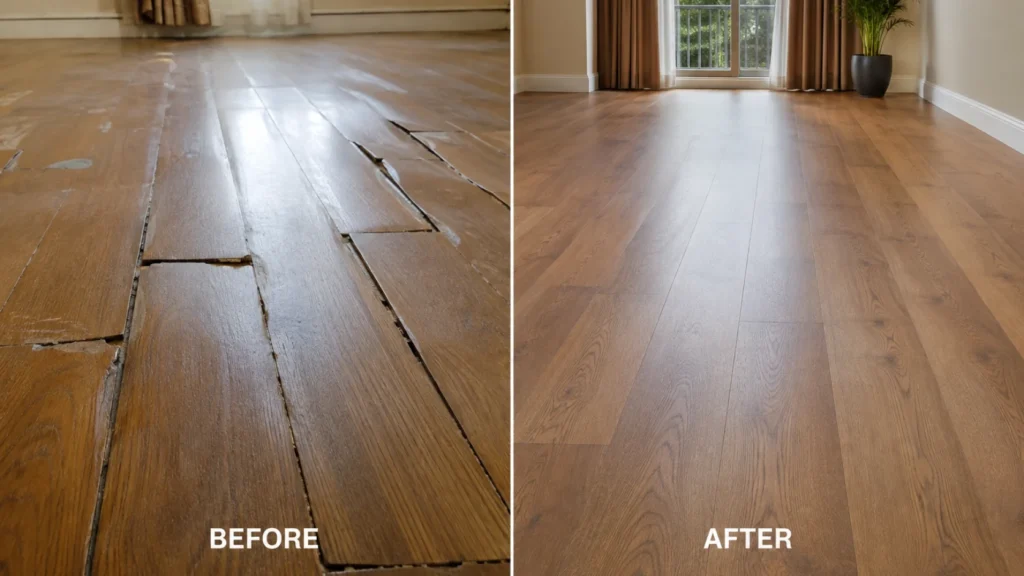
Homeowners often compare installation quotes without factoring in long-term value. A poorly installed floor — even with premium material — can need repairs or replacement within 2-3 years. A professionally installed floor, backed by a reliable wooden flooring company, typically lasts 15-25+ years with proper care.
Actionable takeaway: Always ask a prospective installer these three questions before hiring:
- Do you test subfloor moisture and levelness before installation?
- What acclimatization period do you follow for this wood type?
- Does your service include a workmanship warranty, separate from the material warranty?
Maintenance Tips After Installation

- 1. Use a slightly damp (not wet) mop; standing water damages wood floors.
- 2. Maintain indoor humidity between 40-60% using AC or dehumidifiers during monsoon.
- 3. Use felt pads under furniture legs to prevent scratches.
- 4. Avoid direct, prolonged sunlight exposure — use curtains or UV-protective window films.
- 5. Re-polish or refinish solid wood floors every 7-10 years depending on foot traffic.
Why This Level of Detail Matters: The OAKA Floors Approach
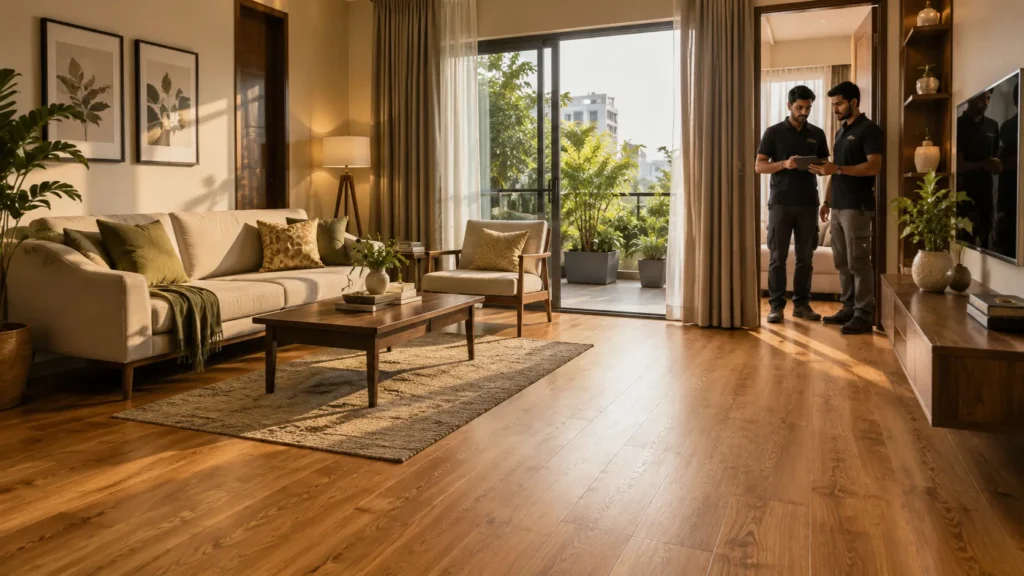
At OAKA Floors, installation isn’t treated as the final step of a purchase — it’s treated as the step that determines whether the flooring performs well for the next two decades. From subfloor assessment to acclimatization scheduling and plank-direction planning, every project follows a documented process rather than guesswork. This is the difference between buying wood and investing in residential wooden flooring services that are built to last in real Indian home conditions.
Homeowners exploring OAKA Floors’ range of premium wooden flooring options get access to both the material expertise and the on-site installation discipline that keeps floors performing well long after the crew has left.
Conclusion
The difference between a flooring project that lasts decades and one that needs repair within a year usually isn’t the wood itself — it’s what happens before installation day. Subfloor checks, acclimatization, levelness, and expansion planning are the unseen work that separates professional Wooden Flooring Installation Services from a rushed job.
If you’re planning a flooring upgrade and want it done right the first time, explore OAKA Floors’ range of premium wooden flooring options and talk to their installation team about your home’s specific conditions before you buy.
FAQ Section
What does a professional wooden flooring installer check before starting work?
They check subfloor moisture, room humidity, floor levelness, and plan expansion gaps and plank direction — all before laying a single plank.
Why does wooden flooring need acclimatization before installation?
Wood adjusts to the humidity and temperature of the room it will be installed in. Skipping this step causes the wood to expand or contract after installation, leading to gaps or buckling.
How long does professional wooden flooring installation take?
For an average room, professional installation typically takes 1-3 days, including subfloor preparation, acclimatization checks, and finishing — though larger homes may take longer.
Is engineered wooden flooring better than solid wood for Indian homes?
For most Indian climates with high humidity variation, engineered wooden flooring is generally more dimensionally stable and less prone to warping than solid wood.
How much does professional wooden flooring installation cost in India?
Costs vary by wood type, room size, and subfloor condition, generally ranging from budget laminate options to premium engineered or solid wood installations. It’s best to get a site-specific quote from a wooden flooring company.
Can I install wooden flooring myself instead of hiring professionals?
While DIY installation is possible for laminate or click-lock systems, it carries a higher risk of subfloor and moisture-related issues. Professional installation is recommended for solid and engineered wood to protect long-term durability.
How often does wooden flooring need maintenance?
Routine cleaning is needed weekly, while refinishing or polishing (for solid wood) is typically required every 7-10 years, depending on foot traffic and wear.
Ready to Upgrade Your Floors?
Discover premium, climate-friendly flooring solutions with OAKA Floors. Explore our collection or connect with our experts to find the perfect flooring for your home or business.